Microneedling
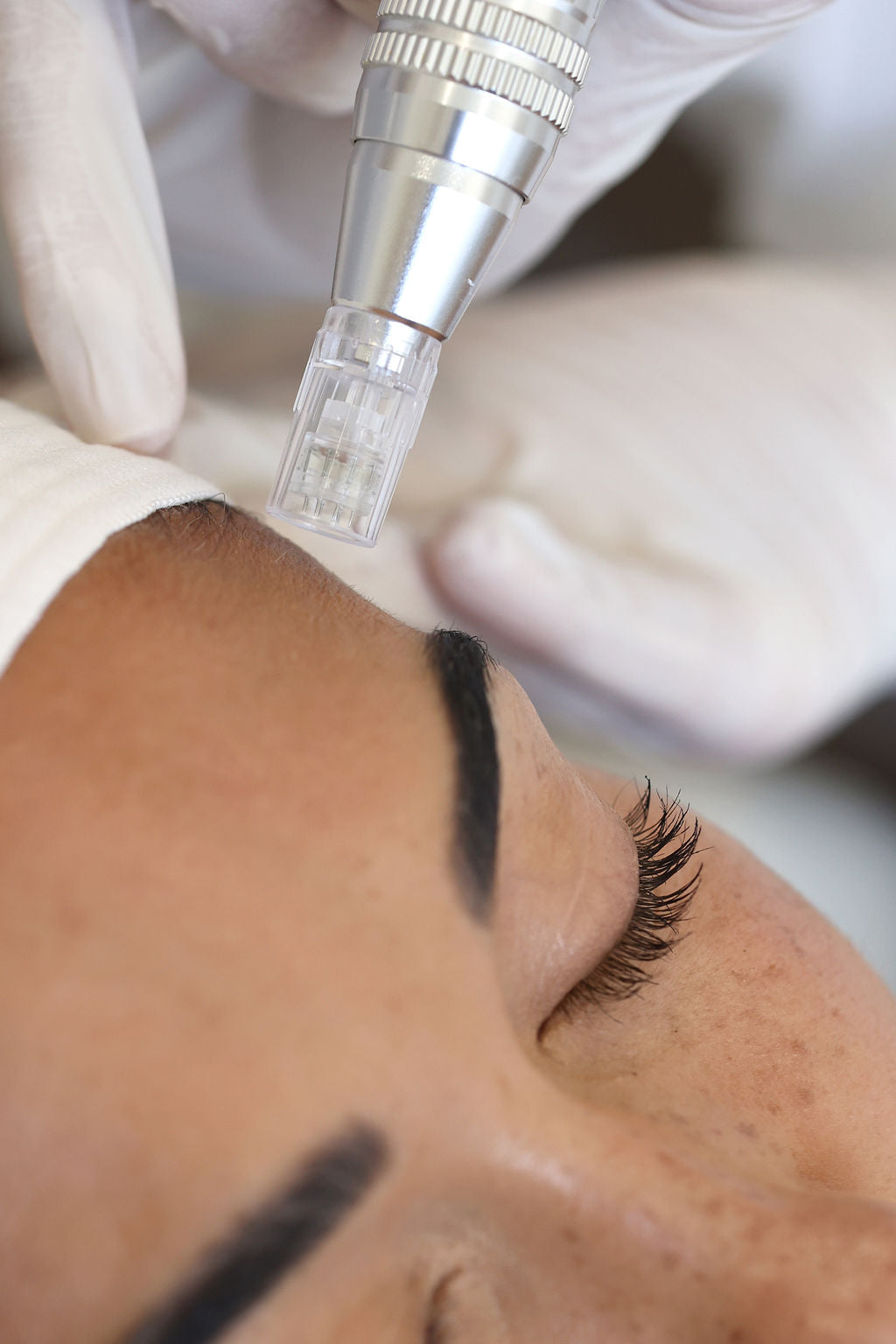
Microneedling (or Skin Needling) is a clinically proven rejuvenation treatment that uses tiny, controlled micro-injuries to stimulate your skin’s natural healing response. This process encourages the production of new collagen and elastin, improving overall skin tone, texture, and firmness.
It’s an excellent choice if you want to:
-
Refine skin texture and reduce the appearance of pores
-
Improve firmness and elasticity
-
Address uneven tone or pigmentation
-
Minimise fine lines and mild scarring
To elevate results even further, your treatment can be customised with a targeted booster—a potent, bio-active solution designed to deliver results beyond standard needling. These boosters are carefully selected to address your unique skin needs, with your therapist guiding you to the most suitable option.
Why Add a Booster?
Boosters work in synergy with microneedling to:
-
Intensify collagen and elastin stimulation
-
Accelerate skin repair and recovery
-
Deliver high-performance ingredients directly into the skin
-
Target specific concerns such as pigmentation, sensitivity, or premature ageing
Our Booster Collection
NCTF®
A powerful revitalising complex of vitamins, amino acids, and minerals that nourishes and recharges tired, lacklustre skin.
Ideal for: Overall skin health, hydration, radiance, and prevention of premature ageing.
BYRYZN Opuluxe V
An advanced biomimetic booster with PLLA and PDRN to brighten, repair, and defend against environmental stressors.
Ideal for: Pigmentation, dullness, and mature or environmentally stressed skin.
EXOMIDE Exosomes
A next-generation, stem-cell derived complex that signals natural healing and cellular regeneration.
Ideal for: Sensitive, inflamed, or redness-prone skin, and for faster recovery post-treatment.
SPRING OFFER: $550
Face & Neck | Bespoke Booster | Hydrating Mask | LED
Usually $610 — neck treatment complimentary for Spring.
Offer ends 30th Nov 2026
Benefits ›
- Promotes a more even skin tone and texture
- Helps reduce the appearance of pores and fine lines
- Supports smoother, more radiant skin over time
- Suitable for face, neck, and décolletage
PREP & AFTERCARE ›
Before Treatment:
- Avoid active skincare ingredients (like retinol or AHAs) for 3–5 days
- Stay well-hydrated and arrive with clean, makeup-free skin
- Let your clinician know about any recent procedures or sensitivities
After Treatment:
- Redness and mild sensitivity may occur and typically settles within 24–48 hours
- Use only gentle skincare products as advised
- Apply SPF daily and avoid sun exposure for several days
PRICING ›
Including an exclusive cocktail of active ingredients that encourages natural cell repair & recovery mask
| FACE | $310 |
| FACE & NECK | $360 |
| FACE; NECK & DECOLLETAGE | $410 | ADD on LED | $50 |
| FACE WITH BOOSTER includes LED & Hydrating Sheet Mask | $560 |
| FACE & NECK WITH BOOSTER includes LED & Hydrating Sheet Mask | $610 |
| FACE; NECK & DEC WITH BOOSTER includes LED & Hydrating Sheet Mask | $660 |
Packages Available
3 treatments @ 10% discount
FREQUENTLY ASKED QUESTIONS
Most clients benefit from a course of 3–6 treatments, spaced 4–6 weeks apart, depending on individual skin goals.
Yes, microneedling can be adapted to suit a wide range of skin types and concerns.
It's best to avoid applying makeup for 24 hours post-treatment to allow your skin to settle.
Your therapist will guide you based on your skin type, current concerns, and treatment goals. For example, NCTF is ideal for overall revitalisation, BYRYZN for pigmentation and ageing, Exomide for sensitive or inflamed skin, and Klardie boosters for hydration and repair.
Boosters are concentrated bio-active solutions that work in synergy with microneedling to enhance results. They target specific skin concerns such as pigmentation, dullness, sensitivity, or fine lines, while also accelerating recovery and improving overall skin health.
Yes. Microneedling can be combined with treatments such as LED light therapy, IPL, or HydraFacial to further enhance outcomes. Your therapist can create a personalised plan tailored to your goals
Most clients describe microneedling as a mild prickling, scratching or vibrating sensation across the skin. Some areas, such as the forehead, upper lip and around the eyes, can feel more sensitive than others. Treatment settings are tailored to your skin, the area being treated and your individual treatment goals.
We recommend allowing approximately 45 - 60 minutes for your appointment. This includes consultation and skin preparation, the microneedling treatment itself, and the application of appropriate post-treatment skincare.
Immediately after treatment, the skin will usually appear red and may feel warm, tight or mildly sensitive, similar to a light sunburn. Redness is typically most noticeable for the first 24–48 hours, although mild dryness, flaking or sensitivity may continue for several days. Recovery varies depending on treatment intensity and individual skin response.
Your skin may begin to look brighter and feel smoother within the first few weeks. Improvements associated with collagen remodelling develop more gradually and may continue over the following 6–12 weeks. For concerns such as texture, fine lines or acne scarring, a course of treatments is generally recommended rather than relying on a single session.
Results vary according to age, skin condition, lifestyle and the concern being treated. Improvements in skin quality can be long-lasting because microneedling stimulates your skin's natural repair and remodelling processes. However, skin ageing continues, so periodic maintenance treatments and a good home skincare routine can help maintain results.
For the first few days, avoid retinoids, exfoliating acids, scrubs and other potentially irritating active ingredients. We also recommend avoiding strenuous exercise, swimming, saunas, steam rooms and excessive heat for at least 24–48 hours, or as advised by your clinician. Keep skincare simple and hydrating, avoid picking or exfoliating the skin, and be diligent with sun protection while the skin recovers.
Microneedling creates controlled micro-injuries that stimulate the skin's natural wound-healing response and collagen remodelling. Over a course of treatments, this can help soften the appearance of certain atrophic or indented acne scars and improve uneven skin texture. The type and depth of scarring matter, so an assessment is important to determine whether microneedling is the most appropriate treatment or whether a combination approach would achieve a better result.
Microneedling may not be appropriate if you have an active skin infection, active acne or inflammation in the treatment area, open wounds, certain skin conditions, or a history of abnormal or keloid scarring. Certain medications, medical conditions, pregnancy or recent procedures may also affect suitability. A consultation and medical screening are completed before treatment to determine whether microneedling is appropriate for you.
RECOMMENDED PRODUCTS